
Is Your Magento 2 Store Ready for the Metaverse?
The metaverse hype has cooled, but the technology hasn't gone away. Here's what Magento 2 store owners should know before spending time or budget on it.
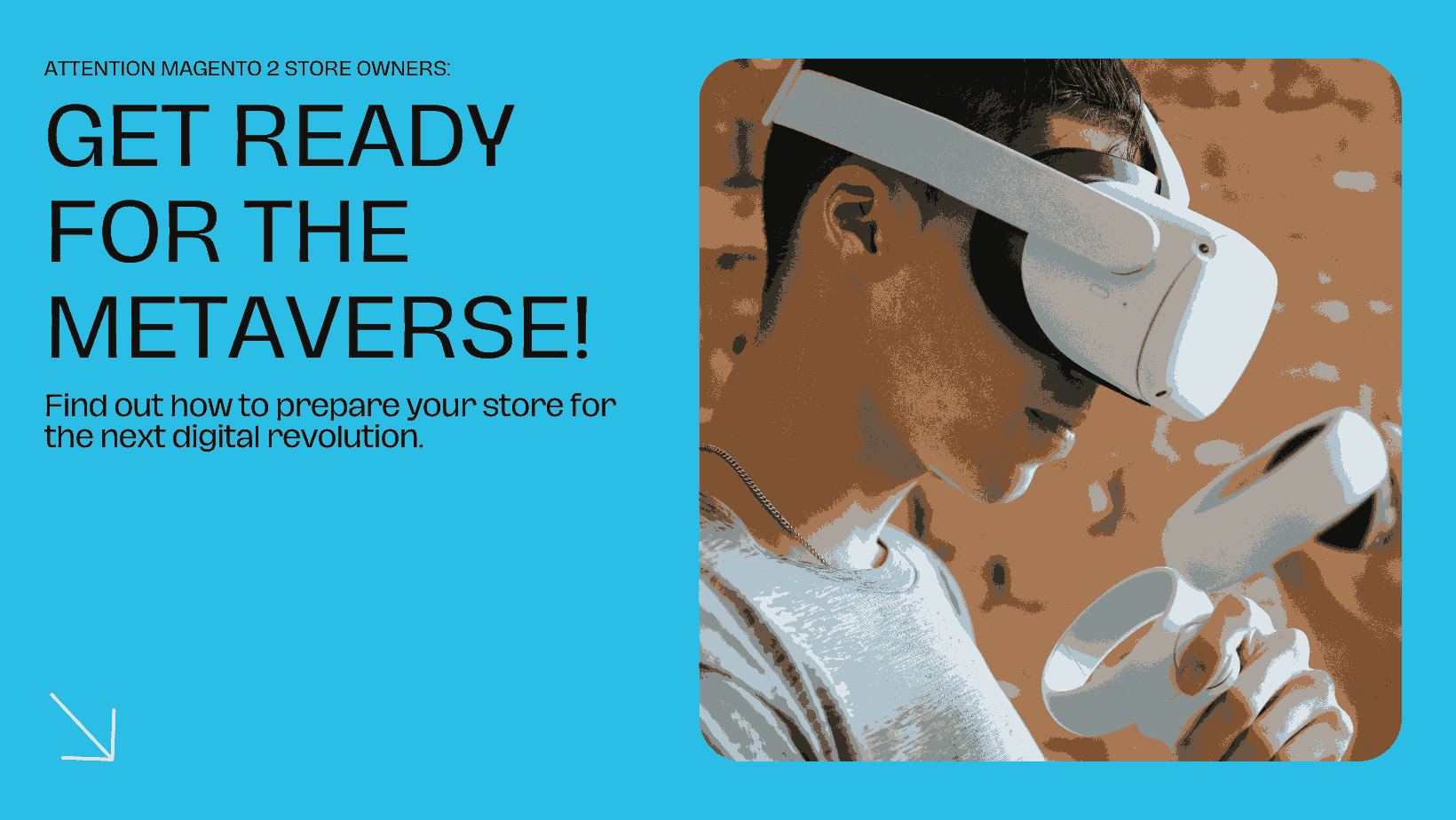
A widely cited 2022 study by Wunderman Thompson found that over half of Gen Z consumers said they were interested in shopping in virtual worlds. That interest never turned into a mainstream shopping channel, and most of the metaverse platforms that generated headlines a few years ago have since scaled back or shut down. Still, the underlying technology, 3D product visualization, virtual spaces, avatar-based interaction, hasn't disappeared, and it's worth understanding where Magento 2 fits.
This post looks at what the metaverse actually is, how well Magento 2 supports it today, and what a Magento 2 merchant should reasonably do about it right now.
What is the Metaverse and Why Should You Care?
The metaverse refers to a set of interconnected virtual worlds where people interact, shop, and attend events through avatars, VR headsets, or an ordinary web browser. In retail, that has meant things like virtual showrooms, 3D product try-ons, and branded spaces inside platforms such as Roblox or Decentraland.
For a Magento 2 store, that could translate into a virtual showroom, an interactive 3D product display, or a branded presence on an existing platform. None of this is standard practice today, and for most stores it shouldn't be a priority ahead of more immediate work like page speed, checkout conversion, or search visibility.
Is Magento 2 Ready for the Metaverse?
Magento 2's API-first architecture makes it easier to connect to external platforms and services than a lot of older e-commerce systems. That's a real advantage if you ever want to experiment with a metaverse integration, but it's not the same as built-in metaverse support, because Magento 2 doesn't have any out of the box.
Strengths that would help if you did pursue this:
- Scalability: Magento 2 can handle high traffic volumes, which matters for virtual worlds with large numbers of concurrent users.
- Customizability: The platform's flexibility allows for building custom experiences tailored to your brand and audience, rather than relying on a one-size-fits-all template.
- Open-source community: A large developer community keeps building extensions, and some of that work already touches 3D commerce and AR/VR.
Real limitations to weigh against those strengths:
- Limited VR/AR integrations: Extensions exist, but the options are still narrow compared to more established Magento 2 categories like payments or shipping.
- Security concerns: Data privacy and transaction security in virtual environments are still being worked out across the industry, not just within Magento.
- No established playbook: There isn't yet a settled set of best practices for e-commerce inside virtual worlds, so early adopters are largely figuring this out as they go.
If You Decide to Experiment
If your brand already skews toward gaming audiences, younger demographics, or 3D-heavy product presentation, a small, low-cost pilot can make sense:
- Look at existing platforms first: Decentraland, The Sandbox, and Roblox already have virtual storefronts you can study before building anything of your own.
- Test VR/AR on your own site before going further: A handful of Magento 2 extensions support AR product previews, which is a smaller lift than a full virtual storefront.
- Invest in 3D product models only if you'll reuse them: High-quality 3D assets are expensive to produce, so they only pay off if you can use them across multiple channels.
- Treat it as a pilot, not a launch: Set a small budget, a defined test period, and a clear way to measure whether it drove any actual sales or engagement.
- Revisit periodically: The technology and the platforms built on it keep changing, so check back every few months rather than committing to a long-term roadmap now.
Should Your Magento 2 Store Invest in the Metaverse Yet?
For most Magento 2 merchants, the metaverse is still a technology worth watching rather than a channel worth building. Consumer adoption of virtual worlds remains small next to conventional online and mobile shopping, and the platforms themselves change fast enough that early investment carries real risk.
Magento 2's flexible architecture means you won't be locked out if the market does shift later. If 3D visualization or a gaming-adjacent audience is already central to your brand, a small pilot is a reasonable way to learn without over-committing. For everyone else, that budget is better spent on speed, search visibility, and a checkout that converts. The metaverse can wait until it proves itself with real purchase behavior instead of survey interest.